
Key takeaways
- An ABA session note is compliant when it documents that a medically necessary, authorized service was actually delivered, in enough objective detail that a payer could verify it.
- Federal audits are already finding widespread improper payments, with the same documentation gaps repeatedly cited: vague language, cloned notes, time/unit mismatches, missing signatures, and late entries.
- Payer requirements vary on signatures, timelines, and necessity language, so practices need a repeatable system (template, pre-billing check, regular self-audit) rather than a one-time checklist.
What makes an ABA session note compliant comes down to one test: can a payer read it and verify that a medically necessary, authorized service was actually delivered? Read on to discover a list of the required elements, an audit-ready compliance checklist tied to the ABA codes payers evaluate, and the documentation gaps that turn into denials and clawbacks.
Why compliant notes matter: audit risk, medical necessity, and clawbacks
When the HHS Office of Inspector General audited Indiana's Medicaid payments for ABA, all 100 sampled enrollee-months included at least one improper or potentially improper claim line, and the OIG recommended the state recover roughly $39 million in federal share and give providers clearer guidance on the detail required in session notes, signature requirements, and what supports the codes billed. That audit is just one of many in a multi-state review series, so the scrutiny isn't isolated.
The stakes land differently by role:
- For the BCBA, accurate documentation is an ethical and professional obligation, not just a billing formality.
- For the owner or admin, a documentation gap is revenue risk: payers read the note as proof the service happened and was necessary.
Medicaid documentation guidelines require records to be complete, accurate, and available for audit. When the note falls short, delivered care turns into unpaid rework or a clawback.
What makes an ABA session note compliant: the required elements
A compliant note carries every element a payer needs to verify the service, and each element is there for a reason. Documentation has to disclose the extent of services and the medical necessity behind them, and all billed units have to be accounted for and tied back to the approved plan.
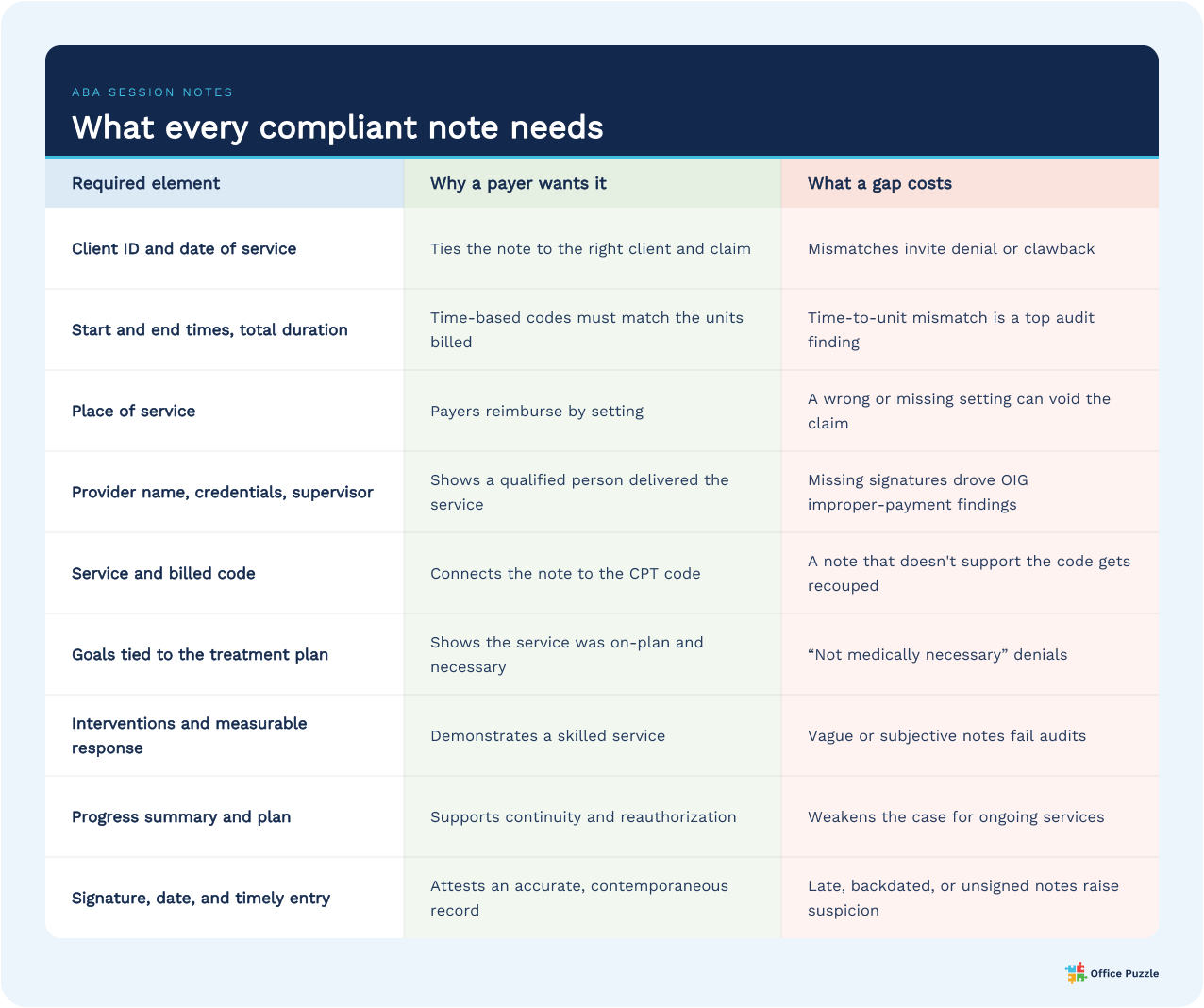
The audit-ready compliance checklist
Use this before a note is finalized and before claims go out. It's organized so each item maps to what a payer evaluates, including the common ABA codes. We’ve included a shortened version in this article, but you can download the full version here: ABA Documentation Compliance Checklist.
Identifying and service details
☐ Client identifier, date of service, and place of service are present.
☐ Rendering provider name and credentials, and supervising BCBA where required.
Time and units
☐ Start and end times and total duration are recorded, and they match the units billed.
Clinical content and medical necessity
☐ Goals or programs targeted are tied to the authorized treatment plan.
☐ Interventions used and the client's measurable response are documented.
☐ A short progress summary and plan for next session are included.
Objectivity and data
☐ Objective, measurable data (counts, percentages, durations), not subjective descriptors.
☐ The note is individualized, not cloned from a prior session.
Signatures and timeliness
☐ Signed and dated per the payer's requirement, including BCBA review where required.
☐ Completed promptly so the record is contemporaneous and accurate, not a late or backdated entry.
CPT Code-specific
☐ The note supports the specific code billed: technician-delivered treatment by protocol, BCBA protocol modification, or family and caregiver guidance. (Note: The OIG specifically flagged documentation supporting the last two.)
Per-payer
☐ Any payer-specific signature, timeliness, or medical-necessity wording requirements are met.
Payer-specific nuances: what varies and how to handle it
Compliance isn't one standard. There are several, and the differences are exactly where practices get caught. Three things vary most often:
- Who needs to sign – some payers require a supervising BCBA to review and co-sign technician notes, while others don't.
- How quickly the note must be completed (windows differ, and late or backdated entries raise audit suspicion against the contemporaneous-record expectation)
- The medical-necessity language a payer wants to see. The OIG audits repeatedly pointed to signature requirements and the level of session-note detail as failure points.
The way to handle this is to treat each payer's rules as a configuration you set once, rather than something your team re-checks note by note. That's the bridge from documentation to billing.
Who documents what: RBT notes and BCBA oversight
Payers care about who delivered the service and who oversaw it, because credentials and supervision determine what's reimbursable. The RBT writes the session note for the direct-care service they delivered, with the objective data from the session. The BCBA interprets that data, adjusts the plan, and, depending on the payer, reviews and signs off on the technician's notes. The Behavior Analyst Certification Board (BACB) establishes scope-of-practice guidelines that assign data interpretation and plan modification to the supervisor, which is why the two roles document different things and why payers look for both.
What turns a documentation gap into a denial
A denial rarely starts at billing. It starts in the note. A gap there becomes a flagged or denied claim, then rework or an appeal, and, if it surfaces in an audit after payment, a clawback.
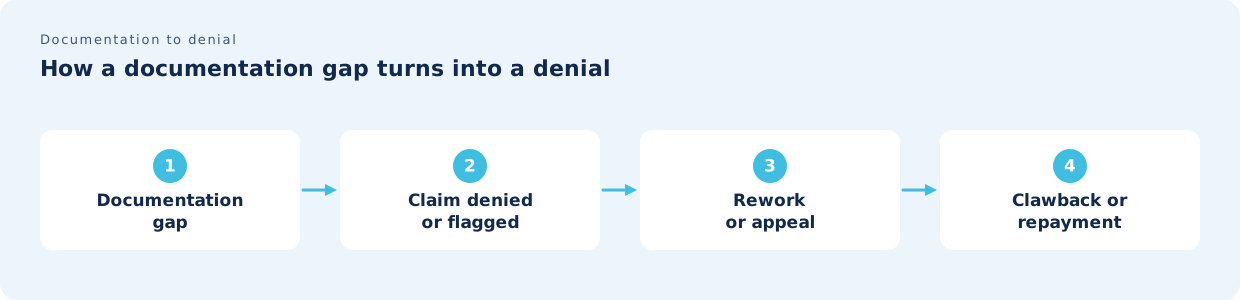
The gaps that most often start that chain are the same ones the audits name:
- vague or subjective language
- notes that look cloned across sessions
- documented time that doesn't match the billed units
- missing or late signatures
- and, notes that don't justify medical necessity.
Building an audit-ready system, not just better notes
Better individual notes help, but audits test the system. The practices that pass treat documentation as a repeatable process: a consistent template so every note carries the required elements, a pre-billing check so a note and its claim agree before submission, and a regular self-audit, for example a quarterly random spot-check of notes against this checklist. The goal is to catch the gap the moment you type your documentation, not months later during a clawback. Software earns its place here when it enforces the required fields, timestamps entries, routes BCBA sign-off, and keeps the note aligned to the claim.
How Office Puzzle helps
Audit-readiness is a workflow problem before it's a documentation problem, and that's where a connected system helps. Office Puzzle keeps scheduling, data, notes, and billing in one place, so a note carries the required elements, the documented time lines up with the units billed, signatures and BCBA review are captured in the workflow, and entries are timestamped rather than reconstructed later. That connection is what makes a single note part of an audit-ready system.
If you want to see how that looks for your practice, you can try Office Puzzle free for 30 days, no credit card required, at officepuzzle.com/free-trial. A walkthrough is not required, but you have the option to book a demo if it's useful.
Frequently asked questions
What makes an ABA session note compliant?
An ABA session note is compliant when it documents that a medically necessary, authorized service was actually delivered, in enough specific, objective detail that a payer could verify it. In practice that means the right identifying, time, and location details, the provider's name and credentials, the goals targeted, the interventions used and the client's measurable response, the data collected, and a signature that meets the payer's requirement. The note must match the authorization, the treatment plan, and the billed CPT code.
What are the most common ABA documentation audit triggers?
The most common triggers are vague or subjective language, notes that look cloned across sessions, documented time that don't match the billed units, missing or late signatures, and notes that don't justify medical necessity. Auditors read the note as proof the service happened and was necessary, so any gap between what was billed and what the note shows is an exposure.
How long do ABA practices need to keep documentation?
Retention requirements vary by payer and state, and the BACB Ethics Code requires records be created, maintained, and disposed of in line with applicable laws and contracts. Many payers and state Medicaid programs set multi-year retention minimums, so practices should follow the longest requirement that applies to them. Check each payer contract and your state Medicaid manual for the specific period.
Does a BCBA have to sign off on RBT session notes?
It depends on the payer. Some payers require a supervising BCBA to review and sign the technician's notes; others don't. Because the requirement varies, practices should confirm each payer's signature rule and build it into their documentation workflow rather than assume one standard applies everywhere.
Is a documentation checklist enough to pass a payer audit?
A checklist helps, but it isn't sufficient on its own. It standardizes what goes into each note and catches missing elements, which prevents many denials. Passing an audit also depends on the content being specific, individualized, and consistent with the authorization and billed codes, plus a system for catching errors before claims go out. The checklist is the floor, not the ceiling.
Sources
- HHS Office of Inspector General. Indiana Made at Least $56 Million in Improper Fee-for-Service Medicaid Payments for ABA (A-09-22-02002). All 100 sampled enrollee-months had improper or potentially improper claims; recommendations on session-note detail, signatures, and support for CPT 97155 and 97156.
- HHS Office of Inspector General. Audits of Medicaid Applied Behavior Analysis for Children Diagnosed With Autism (audit series). A seven-state review series, including Colorado, showing a pattern of federal scrutiny and documentation findings.
- Centers for Medicare & Medicaid Services. Medicaid Documentation for Behavioral Health Practitioners (Fact Sheet). Records must reflect medical necessity and be complete, accurate, and available for audit.
- Behavior Analyst Certification Board. Ethics Codes (BCBA and RBT). Accurate records, supervision responsibilities, and records maintained and disposed of per applicable laws and contracts.