
Key takeaways
- A complete session note is your legal proof that a medically necessary, authorized service happened — every missing element puts the entire claim at risk for denial.
- The four fastest ways to lose a claim are vague language, cloned notes, mismatched time, and lack of documented medical necessity.
- Let your session data drive your note: when you match your measurement method to the behavior, the objective numbers write the note for you.
Balancing back-to-back sessions with rigorous documentation is a constant challenge for RBTs and BCBAs. This resource bridges that gap by providing compliant ABA session note examples, a practical "before and after" audit breakdown, and visuals to help guide you along the way. The objective is to streamline your writing process while ensuring every note stands up to payer scrutiny.
What every ABA session note must include
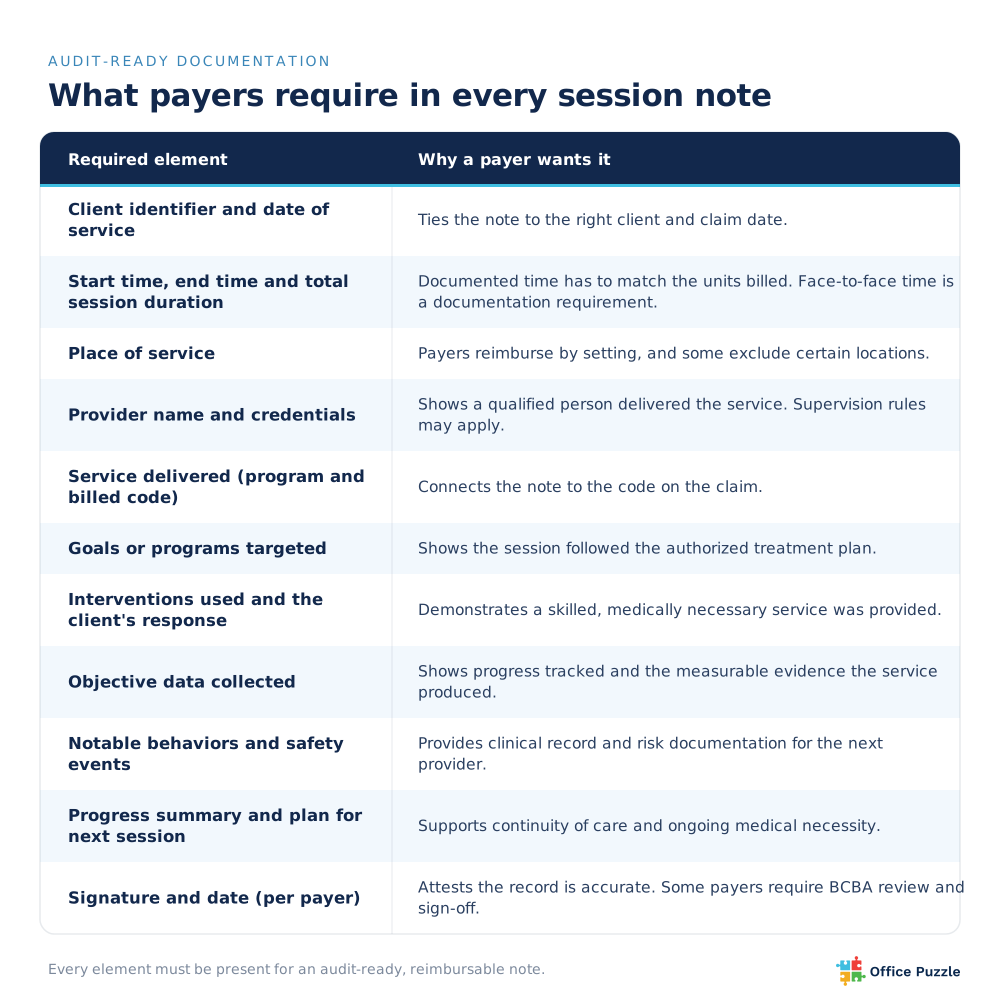
A complete ABA session note must contain specific administrative and clinical elements to remain compliant. Every note you write must explicitly document:
- Session details: Client name, date, exact start and end times, total duration, and place of service.
- Provider information: Your full name, signature, and credentials.
- Clinical data: The specific billing code or service delivered, target goals, interventions used, and objective data collected.
- Client response: How the client responded to interventions, any notable behaviors, safety events, and a brief progress summary and plan.
Together, these elements make the note both clinically useful and defensible to a payer.
Why the documentation is so important
Why each one matters comes down to a single test: payers read the note as proof that a medically necessary service was actually delivered. Federal law states that any provider furnishing Medicaid services is legally required to maintain records that fully disclose the extent of the services provided. The CMS Medicaid documentation fact sheet emphasizes that records must be complete, accurate, reflect the actual face-to-face time, and be readily available for audit. If any piece is missing, the entire claim is at risk for a denial.
Sample RBT session note: audit-ready documentation
This standard RBT session note demonstrates compliant, objective documentation. The client profile is fictional and de-identified. Review the layout of the note and the clinical breakdown explaining why each component is necessary for audit readiness and insurance compliance.
.svg)
Anatomy of a non-compliant note: identification and correction
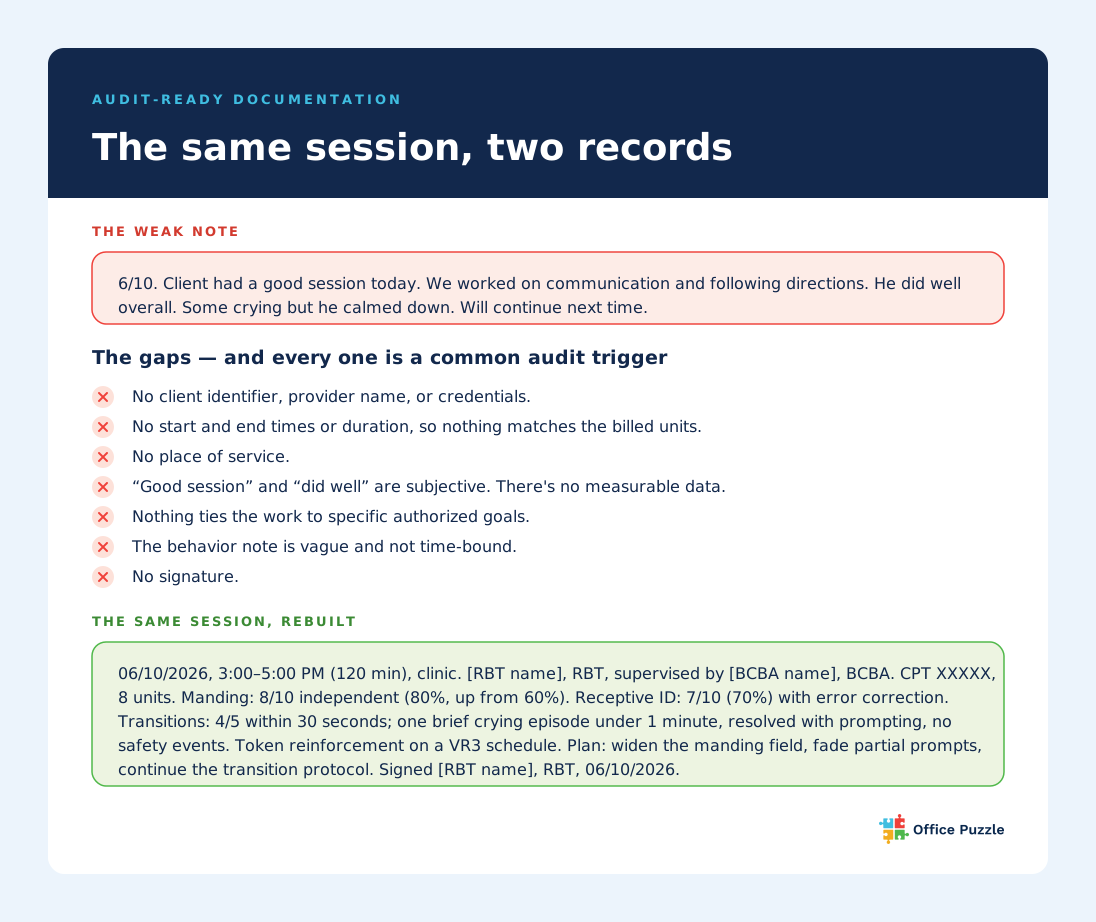
The following example shows a comparison between a weak, non-compliant session note and a strong session note. As you view the weak example, notice that it uses subjective opinions instead of clear facts, leaves out specific data, and misses precise timestamps. This sample highlights the common mistakes and missing details that usually cause insurance companies to flag notes or deny claims.
The second example is the same session, but the rebuilt note has a stronger record behind it. It's specific, measurable, goal- oriented, and matched to the units billed. Nothing about the work changed. Only the record did.
How your data collection feeds the note
The objective line in a strong note does not come from memory. It comes directly from the data you collected during the session, which is why the measurement method you choose shapes how easy the note is to write.
When you match your tracking to the behavior, the clinical numbers pour straight into the text:
- Frequency counts become "8 of 10 independent mands (80%)."
- Duration measures become "tolerated the transition for 45 seconds."
- Rate or interval measures become exact numbers you can drop straight into the text.
Choose the measurement method that fits the behavior first, and the objective line of your note practically writes itself.
For practical guidance on selecting the right measurement technique for any behavior, see our comprehensive guide on choosing ABA data collection methods. For guidance on protecting your session notes against audits, see our guide on session note compliance.
Session note do's and don'ts
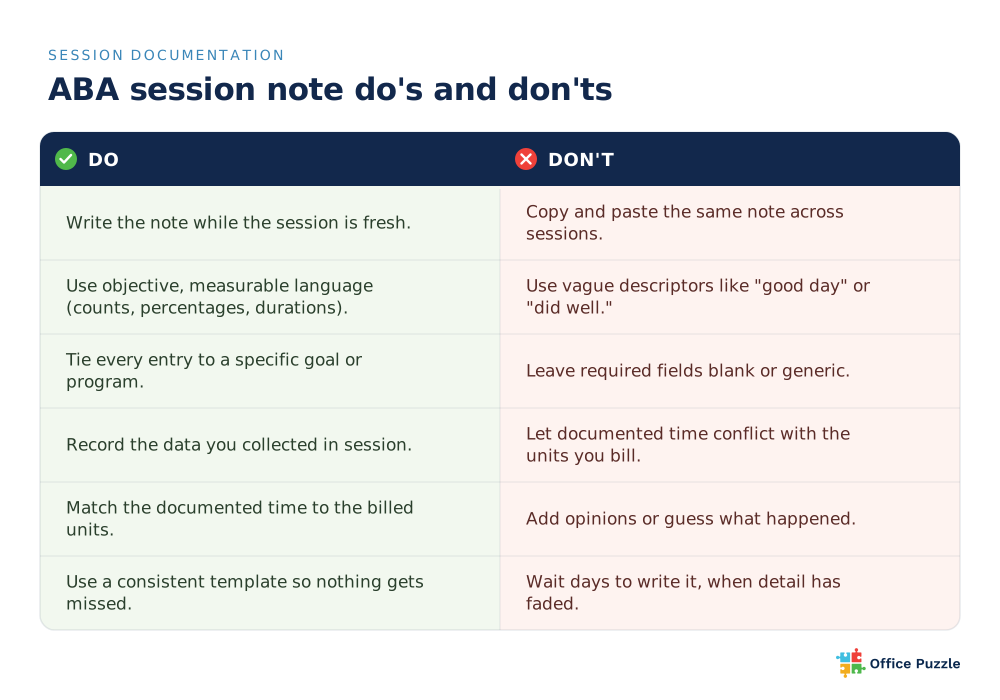
Use this quick reference to keep your documentation objective, professional, and audit-ready.
Before you submit: a 30-second completeness check
Run this on any note before it goes out. If you can answer yes to all seven, the note is in good shape.
- Does the note name the client, date, times, duration and place of service?
- Do the times match the units you're billing?
- Did you tie what you did to specific goals or programs?
- Is there objective, measurable data, meaning numbers rather than adjectives?
- Would a clinician who wasn't in the room understand what happened and how to run the next session?
- Did you note any behaviors or safety events?
- Is it signed?
How Office Puzzle helps
Writing a good note is easier when the data and the note live in the same place. Office Puzzle keeps the data you collect in session connected to the note, so the objective numbers flow in instead of being re-entered from memory, and the note templates prompt you for every required field. That's the difference between a note you rebuild from scratch each time and one that's ready to submit when the session ends.
You can see for yourself with a free 30-day trial of Office Puzzle, no credit card required.
Frequently asked questions
What should an ABA session note include?
An ABA session note must include:
- Session Details: Client name, date, start/end times, and location.
- Provider Info: Name and credentials of the clinician and the clinician’s supervisor
- Clinical Data: Targets addressed, interventions used, client responses, and objective data.
- Summary: Notable behaviors, progress summary, and the plan for the next session.
What is the difference between an ABA session note and an RBT session note?
They largely overlap. An RBT session note is the note a Registered Behavior Technician writes to document the direct-care session they delivered. This includes the interventions run, data collected, and the client's response. "ABA session note" is the broader term covering documentation across the ABA team, including BCBA and supervision notes. In practice, the note an RBT writes after a session is both an RBT session note and an ABA session note.
How do you write a good RBT session note?
Write it so a clinician who wasn't in the room could understand exactly what happened and how to run the next session. Use objective, measurable language (for example, "client completed 8 of 10 mand trials independently"), avoid vague descriptors like "good day," tie what you did to the client's goals, and record the data you collected during the session. Writing the note while the session is fresh, using a consistent template, keeps it accurate and fast.
Are ABA session note templates compliant?
A template helps compliance but doesn't guarantee it. A good template prompts you for every required element, which reduces missed fields and inconsistency. Compliance still depends on what you write in it. Be specific, objective, provide medically necessary details that match the authorization and the treatment plan. A template filled in with vague or cloned content is still a denial risk.
Why do ABA session notes get claims denied?
Insurance payers review session notes as legal proof that a service occurred and was medically necessary. Clear, individualized documentation is the best protection against billing rejections.
The four primary reasons for note-related denials are:
- Vague descriptions: Using generalized statements instead of specific clinical observations and objective data.
- Mismatched time: Discrepancies between the start/end times on the session note and the billing claim submitted.
- Lack of medical necessity: Failing to document how the interventions directly address the client's behavioral and developmental goals.
- Cloned notes: Copying and pasting text from previous sessions, which suggests the treatment was not individualized.
Sources
- 42 C.F.R. § 431.107 (2026). https://www.ecfr.gov/current/title-42/chapter-IV/subchapter-C/part-431/subpart-C/section-431.107
- Behavior Analyst Certification Board. (2021). Registered Behavior Technician ethics code (2.0). https://www.bacb.com/wp-content/uploads/2022/01/RBT-Ethics-Code-230120-a.pdf
- Centers for Medicare & Medicaid Services. (2015, December). Medicaid documentation for behavioral health practitioners [Fact sheet]. U.S. Department of Health and Human Services. https://www.cms.gov/medicare-medicaid-coordination/fraud-prevention/medicaid-integrity-education/downloads/docmatters-behavioralhealth-factsheet.pdf